
Roofers check many parts of your roof to find early damage before it spreads. Small problems can grow fast if they are ignored. A loose shingle or a small leak may not seem serious at first, but it can lead to bigger damage over time. A proper inspection helps protect your property, reduce stress, and avoid costly repairs later.
Your roof deals with changing weather every day. Heat, rain, wind, and debris all affect its condition. Over time, even strong materials begin to wear down.
Roofers inspect roofs to:
Regular inspections give you a clear picture of your roof’s condition. They also help you plan repairs before problems get worse.
Roofers start by checking the outer surface. This is the part of your roof that takes the most impact from the weather.
They look for:
For example, after strong winds, shingles can lift or break. Even one missing shingle can allow water to reach the layer below.
Flashing protects the most sensitive parts of your roof. These include areas around chimneys, vents, skylights, and edges.
Roofers check:
If the flashing becomes loose, water can enter without being noticed. This can lead to hidden damage that spreads over time.
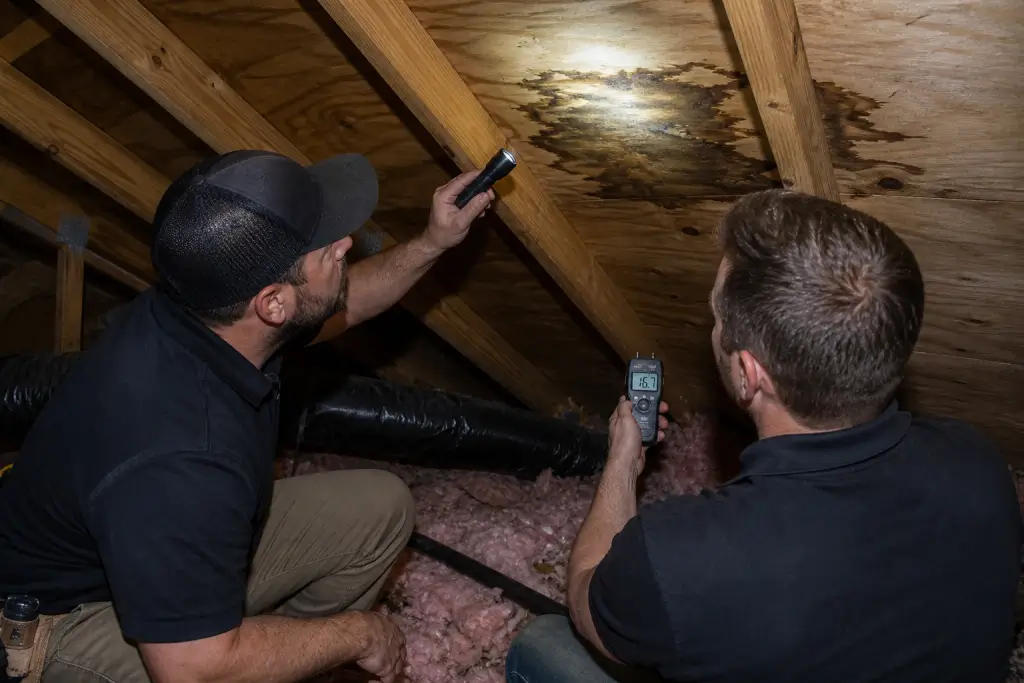
Roofers do not stop at the outside. They also inspect the interior of your property for signs of leaks.
They check for:
For example, a small leak may show up as a light stain on the ceiling. Over time, that stain can grow and lead to larger repairs.
If a leak is found, roof repair can help fix the issue early.
Water must move off your roof quickly. If it does not, it can build up and cause damage.
Roofers inspect:
Flat or low-slope roofs are more likely to have drainage issues. Even small blockages can cause water to stay on the surface longer than it should.
The structure under your roof supports the entire system. Roofers check this area to make sure it is strong.
They look for:
If the structure is affected, simple repairs may not be enough. In these cases, roof replacement may be needed to restore strength.
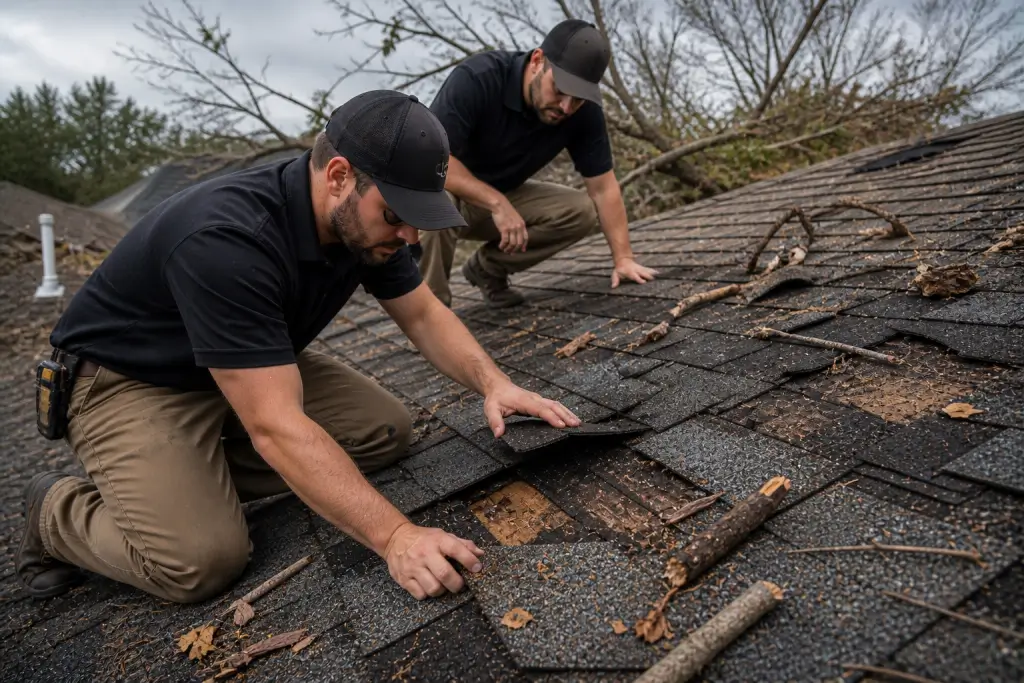
Storms can cause damage that is not always easy to see right away. Roofers inspect your roof after storms to find hidden issues.
They check for:
Even if your roof looks fine from the ground, damage may still be present.
A good inspection does more than find current damage. Roofers also look ahead.
They may notice:
This helps you plan ahead and avoid sudden repairs.
After the inspection, roofers explain what your roof needs. This helps you make clear decisions.
They may suggest:
This step gives you control over your next move and helps avoid surprises.